South Indian · Breakfast
Appam (Kerala lacy rice hoppers)
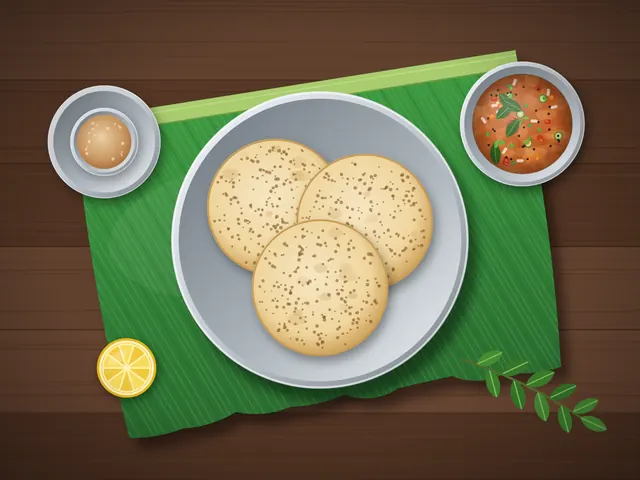
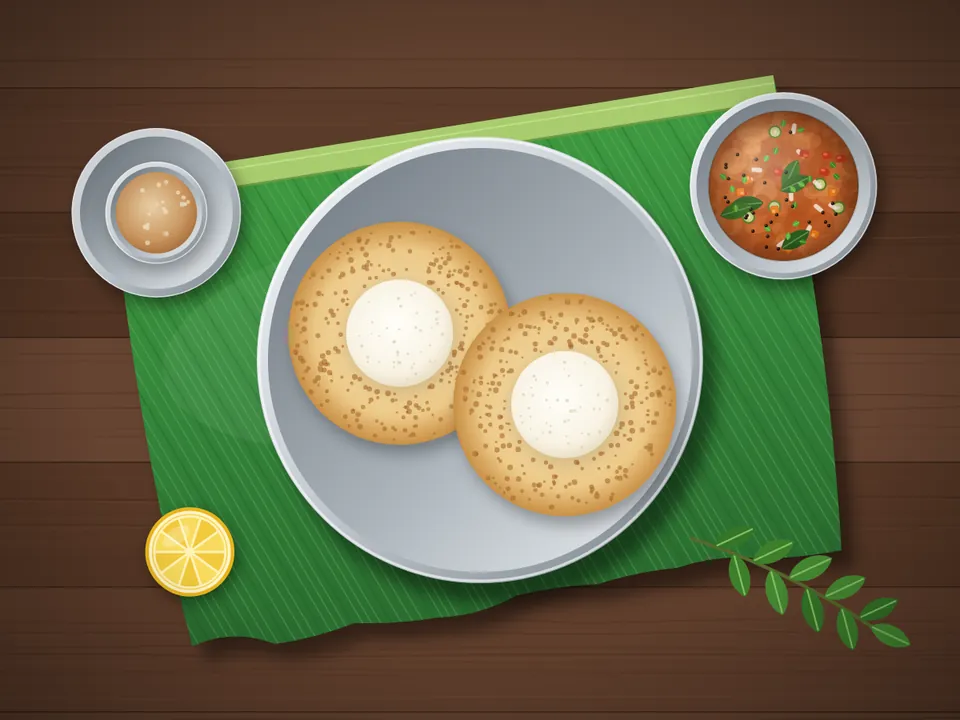
Appam is a bowl-shaped Kerala pancake with crisp, lacy edges and a thick, spongy centre. The batter is made from rice, coconut and a little cooked rice, then left to ferment overnight for a gentle sourness and light texture. Swirled in a special pan, each appam cooks in just 2–3 minutes.
- Prep20 min
- Cook30 min
- Waiting14 h
- Servings5
- Total14 h 50 min · Per serving≈300 kcal
Ingredients
Tap an ingredient to tick it off as you cook.
Method
Waiting: Soaking and fermenting (14 h)
- Rinse the raw rice well and soak it in water for 4–5 hours.
- Mix the yeast and 1 tsp of the sugar into the lukewarm water and leave for 10 minutes until frothy.
- Drain the rice and grind it with the coconut, cooked rice and about 1 cup water to a very smooth, thick batter. Stir in the yeast mixture and the rest of the sugar.
- Pour into a large bowl with room to rise, cover and leave in a warm place for 8–10 hours or overnight. The batter should rise, look bubbly and smell slightly sour.
- Stir in the salt. If the batter is very thick, add a few spoons of water; it should be a little thinner than dosa batter.
- Heat an appachatti or small kadai over medium heat and grease it lightly. Pour in a ladle of batter, lift the pan by the handles and swirl it once so the batter coats the sides thinly and pools in the centre.
- Cover and cook over medium-low heat for 2–3 minutes, until the edges are crisp and golden and the centre is set and spongy. Do not flip.
- Ease the appam out with a spatula and repeat with the remaining batter.
About this dish
Appam, also called palappam in Malayalam, is a classic breakfast in Kerala and is popular in Tamil Nadu and Sri Lanka, where it is known as hoppers. It is a favourite at Christmas and Easter breakfasts among Kerala's Syrian Christian families and is enjoyed by every community in the state. It is cooked in an appachatti, a small, deep, rounded pan with a lid.
Traditionally the batter was fermented with toddy (palm wine); today most homes use yeast. The cooked rice helps make the centre soft and spongy, while a pinch of sugar feeds the yeast and helps the edges brown. Appam is usually paired with a mild coconut milk vegetable stew, but it is also lovely with kurma, chickpea curry or sweetened coconut milk.
Tips
- In cold weather, ferment the batter in a switched-off oven with the light on to keep it warm.
- If the edges do not turn lacy, the batter is too thick; if the centre stays raw, cook a little longer under the lid.
- Leftover batter keeps in the fridge for 2 days; bring it to room temperature before cooking.
Serve with
Serve hot with Kerala vegetable stew, kurma or sweetened coconut milk.
Goes well with: Coconut Chutney