Upma guides
Upma problems and how to fix them
Upma has only a handful of ingredients, so small details make a big difference. Here are the most common problems, why they happen and how to fix them, sometimes even after the upma is cooked.
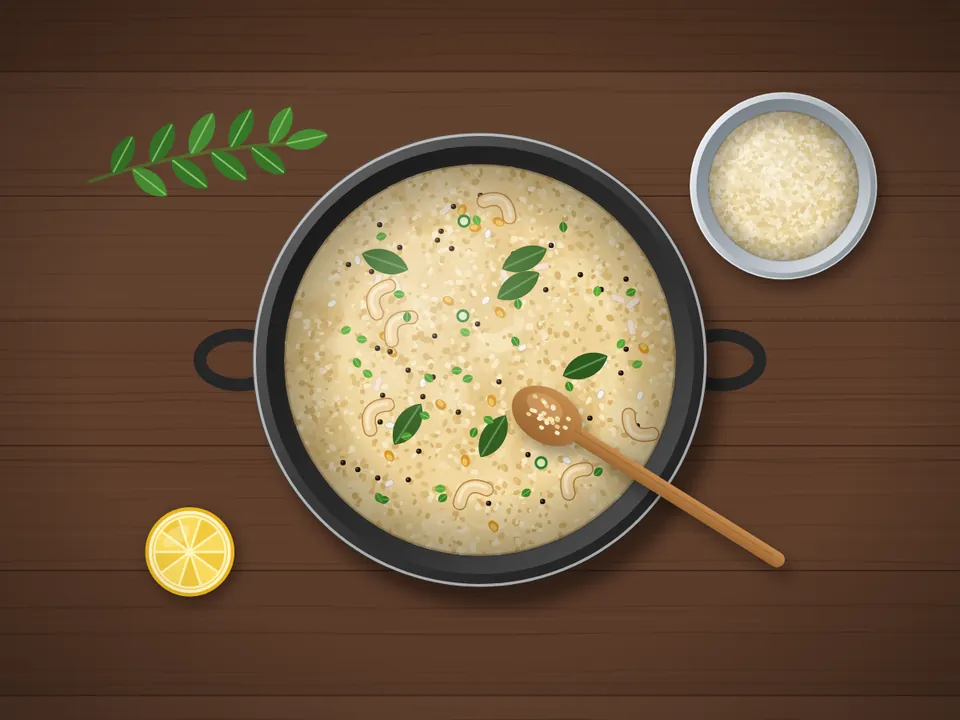
Lumpy upma
Why it happens: The rava went in too fast, or the water wasn't boiling. Rava swells instantly in hot water, so any clump that forms gets sealed with a dry center.
How to fix it: Keep the water at a rolling boil and pour the rava in a thin stream with one hand while stirring with the other. If lumps have already formed, press them against the side of the pan with the back of a spoon while the upma is still hot.
Sticky or gluey upma
Why it happens: The rava wasn't roasted enough, there was too much water, or the upma was stirred too much after the rava went in.
How to fix it: Roast the rava until it smells nutty and looks dry and separate. Use 2 to 2½ cups of water per cup of rava, stir only until combined, then cover and let the steam do the work.
Dry, crumbly upma
Why it happens: There wasn't enough water, or the upma cooked too long on high heat.
How to fix it: Sprinkle 2–3 tablespoons of hot water over it, cover and rest for 2 minutes, then fluff with a fork. A teaspoon of ghee also softens it.
Raw, floury taste
Why it happens: The rava wasn't roasted long enough.
How to fix it: Dry-roast the rava on medium-low heat for 4–5 minutes, stirring, until fragrant. Roast a big batch and store it in an airtight jar so it's always ready.
Bland upma
Why it happens: Too little salt, a weak tempering or no acidity.
How to fix it: Salt the water well and taste it before adding the rava. Let the mustard seeds fully splutter, fry the lentils until golden, and finish with a squeeze of lemon and fresh coriander.
Too salty
Why it happens: The salt was guessed, or salty ingredients such as leftover idlis were used.
How to fix it: Stir in a little more roasted rava with a splash of hot water, or add more vegetables. Serving it with plain yogurt also balances the salt.
Burnt or bitter tempering
Why it happens: The oil was too hot, or the lentils and curry leaves cooked too long.
How to fix it: Use medium heat, add the dals as soon as the mustard seeds pop, and add the curry leaves last. If anything turns dark brown, start the tempering again.
Hard or undercooked vegetables
Why it happens: The vegetables were cut too large, or added after the water.
How to fix it: Dice them small and sauté them for 3–4 minutes before adding the water, so they finish cooking at the same time as the rava.
Once the roasting and the water ratio are right, the rest comes naturally. Start with the classic rava upma, then try the variations.