South Indian · Sweet
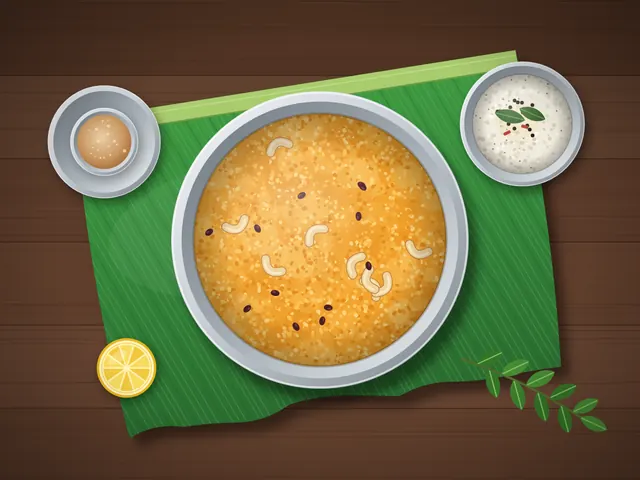
Sakkarai pongal (sweet jaggery rice pongal)
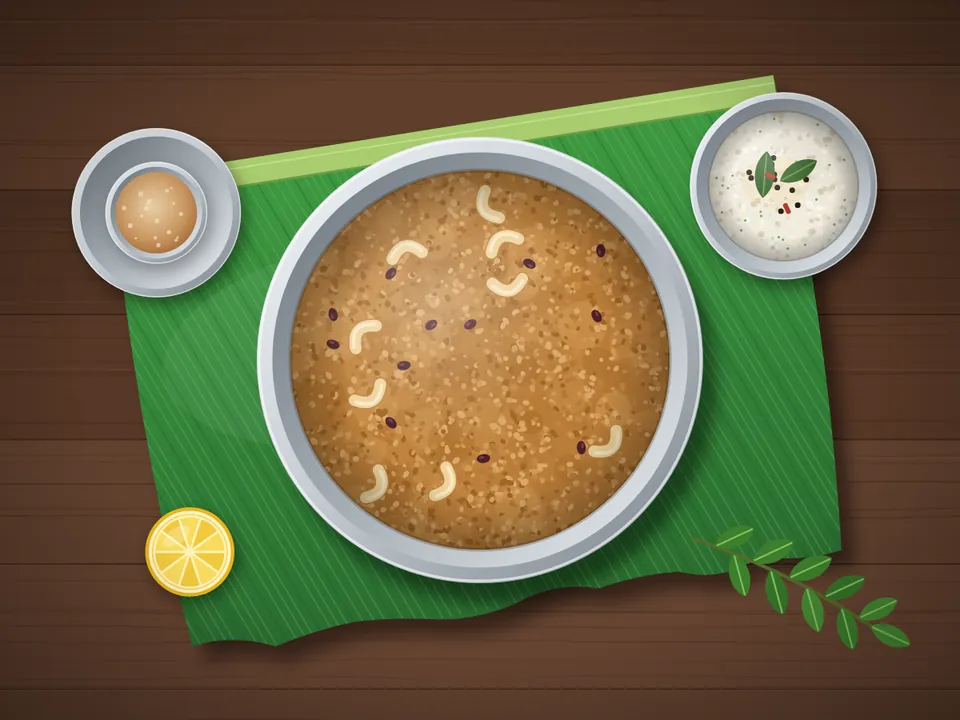
Sakkarai pongal is a rich, comforting sweet of rice and moong dal cooked until soft, then simmered with jaggery and finished with plenty of ghee, cashews and cardamom. It has a deep, caramel-like sweetness from the jaggery and a creamy texture, and it is the dish that defines the Pongal harvest festival in Tamil Nadu.
- Prep10 min
- Cook35 min
- Total45 min
- Servings4
- Per serving≈440 kcal
Ingredients
Tap an ingredient to tick it off as you cook.
Method
- Roast the dal. Dry roast the moong dal in a pan on low heat for 3–4 minutes until light golden and fragrant.
- Cook the rice and dal. Wash the rice and dal together, add 3 cups water and pressure cook for 5 whistles on medium heat, or simmer in a covered pot for 25–30 minutes, until very soft; mash lightly.
- Melt the jaggery. Heat the jaggery with ¼ cup water, stirring until it melts, then strain it to remove any impurities.
- Combine. Pour the jaggery syrup into the cooked rice and dal and simmer on low heat, stirring, for 5–6 minutes until thick and well blended.
- Add ghee and spices. Stir in 3 tbsp ghee, the cardamom, and the edible camphor and nutmeg if using.
- Fry the nuts. Heat the remaining 1 tbsp ghee, fry the cashews until golden and the raisins until puffed, and pour them over the pongal before serving.
About this dish
Sakkarai pongal, meaning sweet pongal in Tamil, is cooked on Thai Pongal in mid-January, when families boil new rice in a pot until it overflows as a sign of plenty. It is also a common prasadam in temples and is offered on many festival days. In Telugu it is called chakkera pongali, and in Karnataka it is sihi pongal.
The rice and dal must be cooked very soft before the jaggery goes in, because the sweetness stops them from softening further. Jaggery is melted separately and strained to remove any grit. A pinch of edible camphor, called pachai karpooram, gives the temple-style aroma, and some cooks cook the rice in milk and water for a creamier result.
Tips
- Make sure the rice and dal are fully soft before adding jaggery; they will not soften afterwards.
- Pongal thickens as it cools, so turn off the heat while it is still slightly loose, or stir in 2–3 tbsp hot milk when reheating.
- Use only a tiny pinch of edible camphor; too much makes it taste bitter.
Serve with
Serve warm with ven pongal and medu vada for a festive breakfast.
Goes well with: Ven Pongal, Medu Vada